Riva del Garda Travel Guide: Things to Do, Where to Stay & Insider Tips (2026)
By Loïc M. · Updated
Riva del Garda is the northernmost town on Lake Garda — Belle Époque, Habsburg-built, administratively part of Trentino rather than Lombardy or Veneto, and Italy’s windsurfing capital. The geography sets the tone: vertical limestone cliffs drop straight to the lake, the Sarca river feeds the basin, and the Pelèr wind blows reliably from the north every morning. The town itself is the largest on the lake at around 17,000 residents — proper restaurants open all year, a medieval old town with a working harbour, the 33m Apponale tower you can climb, a 16th-century Venetian fortress 200m up the cliff, and waterfront promenades that actually go somewhere. This guide is for visitors planning three to seven nights — the sweet spot for Riva, which rewards a real stay over a quick day trip.
Quick reference
| Best for | Active stays, windsurfing, wellness, alpine-lake combination |
| How long | 3 nights minimum, 5–7 nights ideal |
| Nearest airport | Verona Catullo (VRN), 90 minutes by car |
| Nearest station | Rovereto (25 min by bus) on the Brenner line |
| Best season | May–June, September; July–August for windsurfing |
| Cost level | Mid-range — 10–20% below the southern lake |
| Family friendliness | High — flat promenades, beaches, easy transport, family hotels |
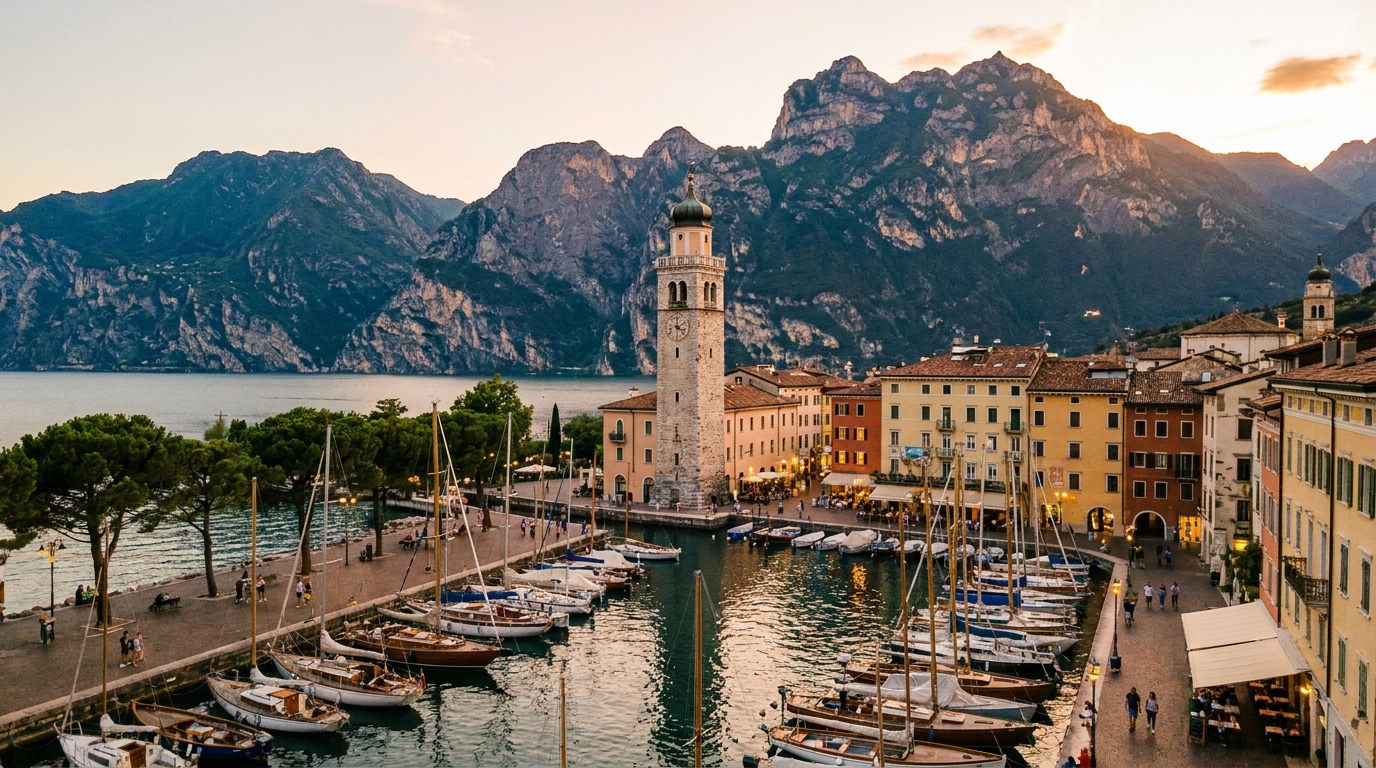
Table of contents
- Riva del Garda at a glance
- Things to do in Riva del Garda
- Where to eat in Riva del Garda
- Where to stay in Riva del Garda
- How to get to Riva del Garda
- When to visit Riva del Garda
- Day trips from Riva del Garda
- Frequently Asked Questions
- Related guides
Riva del Garda at a glance
Riva sits at the lake’s northern tip, in the Trentino-Alto Adige region — a detail that matters more than most guides admit. Trentino’s German-speaking heritage shows up in the architecture (Habsburg-era spa buildings), the cuisine (canederli, speck, polenta carbonera), and the bilingual signage in some establishments. The town belonged to Austria until 1918. The post-Habsburg Belle Époque resort heritage — when central Europeans came south for the lakes — is still legible in the grand hotels and the promenade layout.
Permanent population is around 17,000 — the largest town on the lake, which means real services: full-year supermarkets, a proper hospital, several pharmacies, banks, and a restaurant scene that does not collapse into a few open kitchens between November and April. The medieval old town is compact, walkable, and centred on Piazza III Novembre with its Apponale tower. The harbour basin is genuinely working — fishing boats, sailing schools, the ferry pier, the regatta start lines.
What surprises first-time visitors: how alpine the setting feels (cliffs, not olive hills), how German the menu mix can be (Trentino specialities sit next to Italian classics), and how active the average visitor is. Riva is not a sit-on-a-sunbed town. It is a windsurfing-and-sailing town, a road-cycling town, a hiking town. Choose accordingly.
Things to do in Riva del Garda
Bastione Venetian fortress — A 16th-century cylindrical fortress ruin 200m up the cliff above the old town. Walk up via the switchback path (15–20 minutes) or take the inclined lift opened in 2021 (€5 return, but check operating hours). The terrace at the summit has the best lake-view restaurant in Riva and a panorama down the entire northern basin to Garda.
Torre Apponale — The 33m harbour tower from the 13th century. €2 to climb, open April to October. Climb it on arrival to get your bearings — the rooftop view orients the whole old town.
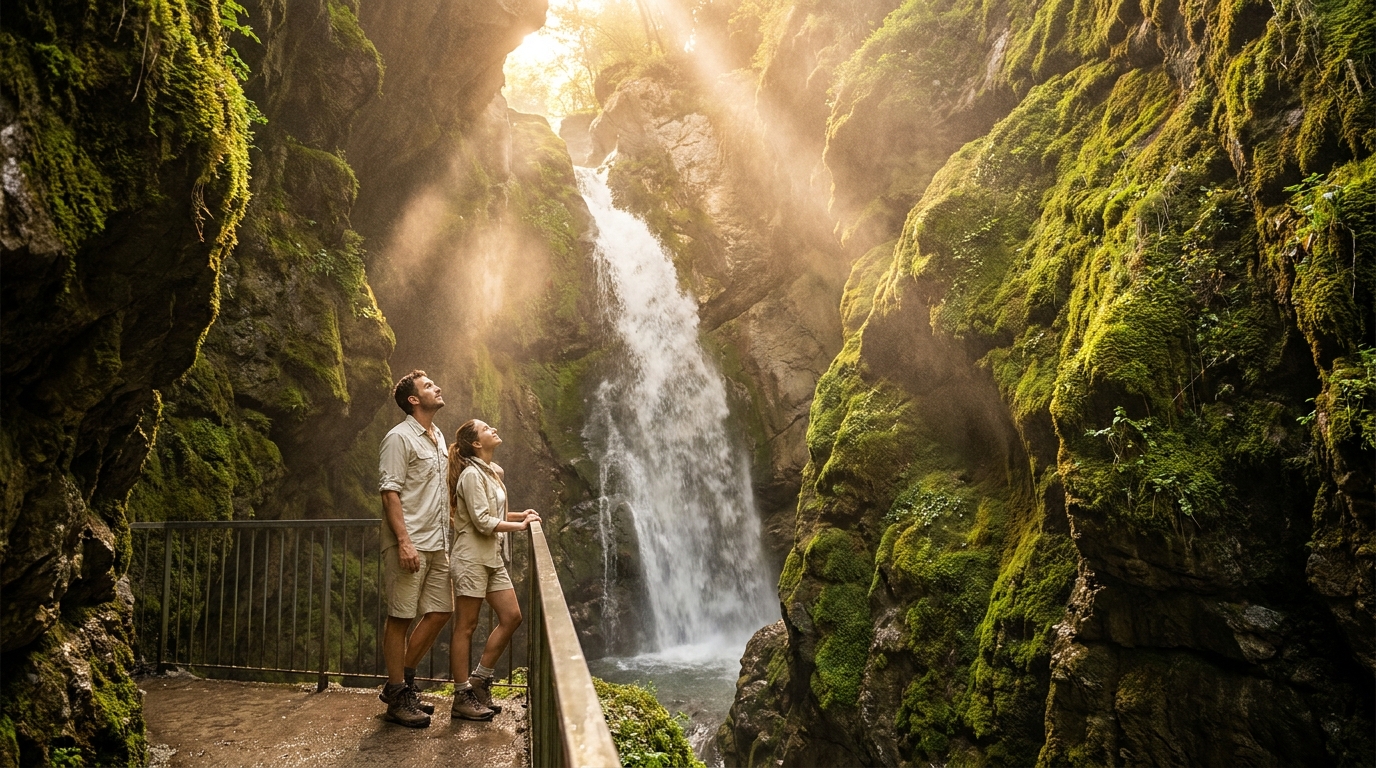
Cascata del Varone — 98m waterfall in a narrow vertical gorge, 3km uphill from the centre. €6 entry, daily 9am–5pm (until 7pm May–August). One of the lake’s geological oddities — the water comes from an underground basin fed by Lago di Tenno. Allow an hour. Genuinely worth the detour.
Windsurfing and sailing — Riva is Italy’s windsurfing capital. The morning Pelèr brings 25–35 km/h from the north between 9am and noon; the afternoon Ora fills in from the south after 1pm. Multiple schools at the Sabbioni beach (Fraglia Vela Riva, Univela Sailing) offer tasters from €70 and certified courses across multiple days. The October Olympic Week regatta closes the season.
Bike or walk to Limone — The Ciclopista del Garda runs south along the western shore on cantilevered walkways above the lake. The stretch from Riva to Limone is around 8km one way — flat, paved, free, and one of the most scenic waterfront paths in Europe. Bike rental from €15/day.
Rocca di Riva and Museo Alto Garda (MAG) — 12th-century moated castle in the centre, now housing the regional museum. €5, well-curated mix of archaeology, picture gallery, and local history. An hour to ninety minutes.
Lago di Tenno — 10km up the road, a turquoise mountain lake at 570m with a tiny island in the middle. The medieval village of Canale di Tenno just above is the prettiest hilltop hamlet in the area. A half-day round trip; combine with the Cascata del Varone.
Beaches — Spiaggia Sabbioni is the main town beach at the harbour, free, fine pebble, with the sailing school. Spiaggia degli Olivi just east is quieter, fringed by — yes — olive trees. Both walkable from the centre.
For broader lake-wide context see our Lake Garda things-to-do guide. The Trentino tourism board at visittrentino.info covers the wider region.
Where to eat in Riva del Garda
Riva has the lake’s broadest year-round restaurant scene. The mix is unusual: classic Trentino mountain cooking (canederli, polenta carbonera, smoked meats), lake-fish trattorie, modern Italian, and the inevitable handful of German-tourist-focused places to avoid.
Traditional Italian and Trentino: Osteria Le Servite is the most reliable mid-range option — tight menu, lake fish and Trentino dishes, around €40–50 a head. Ristorante All’Oca does proper local cooking — carne salada, canederli, Trentino wines — in a quiet street off the centre, under €40. Antica Trattoria del Crucolo is the destination for grilled meat and mountain cheese; allow €45–55.
Lakeside: Restel de Fer is the historic option — a 14th-century building serving updated lake-fish dishes. Around €60–70 a head with wine. Ristorante Antiche Mura has terrace seating in the old town with reliable, mid-tier cooking around €40.
Pizza: Pizzeria al Vecchio Mulino does a proper wood-fired pizza under €15. Pizzeria Centrale on Via Maffei is the local default — busy, fast, decent.
Casual and aperitivo: the bars on Piazza III Novembre serve the best people-watching aperitivo in town. Spritzeria Centrale stocks a serious Aperol-Campari list. Caffè Italia is the morning coffee spot.
Gelaterie: Cristallo is the artisan choice. Avoid the chains with the over-decorated displays.
Practically speaking, the town is large enough that you can usually walk in for an early dinner (before 7.30pm) without booking — except in late August and during regatta weeks, when you should book.
Where to stay in Riva del Garda
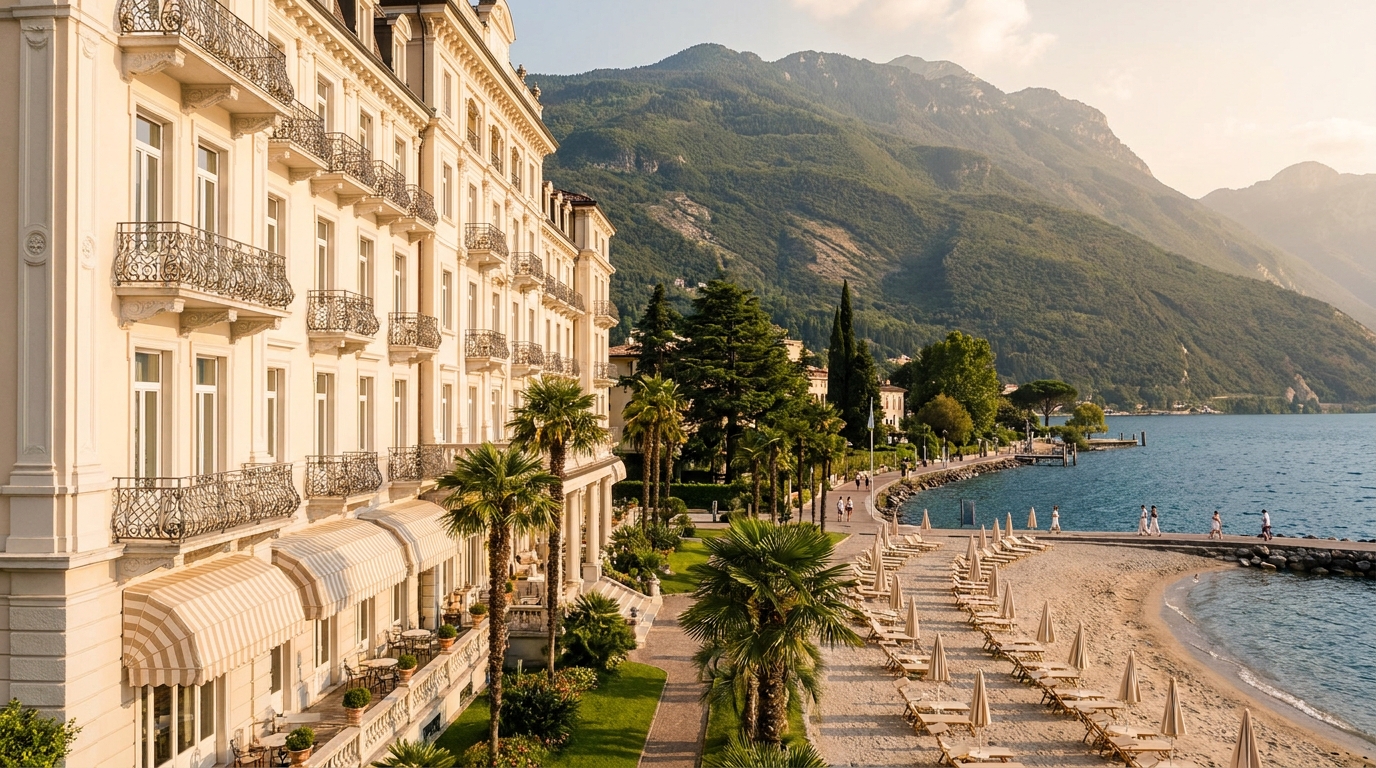
Riva’s hotel stock is broader than any other Lake Garda town. Three bands: Belle Époque grand hotels along the lakefront (the historic spa-town heritage), modern four-star resorts toward the eastern beaches, and a healthy family-run three-star and B&B layer in and around the old town.
Luxury: Lido Palace is the historic five-star — restored Belle Époque palace, Michelin-starred dining (Ristorante Re della Busa), spa, lakefront pool. Doubles from €420 in shoulder season, well over €700 in August. Du Lac et Du Parc Grand Resort is the larger five-star alternative — sprawling grounds, multiple pools, more family-oriented; doubles from €290.
Mid-range: Hotel Centrale has the best old-town location for the price (right on Piazza III Novembre); doubles from €140. Hotel Astoria is the well-run four-star a few minutes from the harbour, lake-view rooms from €170. Hotel Sole is the lakefront mid-range with a terrace bar, from €160.
Budget: Hotel Vittoria and the family-run guesthouses (Garnì San Giorgio, Locanda Lucia) deliver clean three-star rooms from €85–130. For longer windsurfing or cycling stays, the apartment-rental market in the eastern Tenno-road suburbs runs 20–30% below hotel rates.
Browse the full hotel directory for our vetted list.
How to get to Riva del Garda
By car — A22 (Brenner motorway), exit Rovereto Sud, then 20km west via the SS240 through the Sarca valley. From Verona: 90 minutes via A22. From Milan: 2h 30 via A4–A22. From Munich via the Brenner pass: 3h 30 to 4h depending on pass traffic — Riva is the closest major Lake Garda town to the Brenner, which is exactly why the German-speaking visitor share runs as high as it does. Parking inside the old town is limited but workable: Parcheggio Gardarius (€1.50/hour) and Parcheggio Salesiani are the main options.
By train — Rovereto on the Brenner line is the practical closest station — 25 minutes by SAB bus (line 332) to Riva, several services per hour. From Verona Porta Nuova it is around 1h 30 to Rovereto by Frecciargento, then the bus. From Munich via Innsbruck, the EuroCity trains stop at Rovereto.
By air — Verona Catullo (VRN) at 90 minutes is the convenient option. Bergamo Orio al Serio (BGY) is 2h 15. Innsbruck (INN) at 2h via the Brenner is genuinely viable for German-Austrian visitors. Munich (MUC) is 3h 30.
By ferry — Navigazione Lago di Garda runs frequent services connecting Riva to Limone, Malcesine, and (slower) Torbole and the central lake. The catamaran service makes Riva–Malcesine in around 30 minutes. Timetable: navigazionelaghi.it.
By bus — SAB runs reliable connections from Rovereto, Trento, and Bolzano in the north, and along the eastern lake shore down to Verona. The full bus map is at trentinotrasporti.it.
When to visit Riva del Garda
May and June are excellent: 18–25°C, the lake warming through 18–22°C, fewer crowds than the summer peak, the wildflowers at their best up Monte Baldo. Hotel rates around 30% below August. Our top window for a mixed-activity stay.
July and August is high season — but Riva handles it better than Sirmione or Limone because the town is large enough to absorb. 26–32°C, lake water 22–24°C, every restaurant open, every windsurfing school running. Rates at their ceiling. This is the strongest windsurfing window for the Ora wind.
September is our personal favourite at Riva. The lake holds 22°C into early October, the Olympic Week regatta closes the season with sailing crowds, the air clears as autumn settles in. The first two weeks of September are quieter than mid-July at a fraction of the rates.
October to April is the off-season — but Riva does not shut down the way the smaller lake towns do. Hotels stay open, restaurants stay open, the old town is genuinely pleasant in winter light. The Sarca valley walks and the surrounding hilltop villages (Canale di Tenno, Pranzo, Drena) are most atmospheric in this window. December brings Christmas markets in Piazza III Novembre.
The hidden window: the last week of September into the first week of October. Warm enough to swim, sailing regattas in full swing, post-school-holiday lull, harvest in the surrounding vineyards.
Day trips from Riva del Garda
Riva sits at the top of the lake, which biases day-tripping in two directions: south down the lake by ferry or car, and north into Trentino’s mountains.
- Malcesine — 30 minutes by ferry, 25 by car. The headline southern day-trip. Covered in our Malcesine guide.
- Limone sul Garda — 20 minutes by ferry directly across the lake, or a one-hour bike ride via the Ciclopista. A clean half-day.
- Lago di Tenno + Canale di Tenno — 30 minutes by car. Turquoise mountain lake plus the prettiest hilltop hamlet in the region. Half-day combination with the Cascata del Varone.
- Madonna di Campiglio (Brenta Dolomites) — 1h 15 by car. A genuine alpine day, with cable cars up to the Brenta peaks. Best in summer for hiking, in winter for skiing.
- Sirmione — 1h 30 by car along the western shore. A long day but doable. See our Sirmione guide.
- Verona — 1h 30 by car or 2h via bus and train. A full day for the Arena and the old town. Heavier as a Riva day trip than from the southern lake.
- Sarca valley climbing and hiking — Arco, 5km up the road, is one of Europe’s top sport-climbing destinations and the gateway to a network of valley walks.
Our day trip from Verona to Lake Garda guide works in reverse for visitors planning a Verona side trip. For boat-rental options from the Riva harbour, see boat rental at Lake Garda.
Frequently Asked Questions
Is Riva del Garda worth visiting?
Yes — and arguably more than visitors first expect. The northern lake is dramatically different from the south: alpine cliffs, Belle Époque architecture, a genuine working-town feel rather than a souvenir-shop strip. Riva is the most year-round-liveable town on Lake Garda and the most varied for active travellers. The catch is the journey — it is the furthest major town from Verona airport. If you can give it three nights or more, it earns the trip.
How long should I spend in Riva del Garda?
Three nights is the minimum to do the headline visits (Bastione, Cascata del Varone, a Limone or Malcesine ferry day) without rushing. Five to seven nights is our sweet spot — adds a windsurfing or cycling element, a Brenta Dolomites or Lago di Tenno day, and the kind of slow Trentino dinner evenings that Riva is built for. A full week makes sense if you are using Riva as a base for sailing courses or road cycling.
Is Riva del Garda better than Malcesine?
Different tools for different jobs. Malcesine is more compact, more Italian-feeling, and has the Monte Baldo cable car — better for a two-to-three-night active stay. Riva is larger, more year-round, more Trentino-Habsburg in character, with broader hotels and restaurants — better for a four-to-seven-night stay or an off-season visit. For a couple choosing one, our short answer: Malcesine if you want medieval-Italian charm, Riva if you want depth.
Can you visit Riva del Garda as a day trip?
It is possible but not ideal. From Verona, 1h 30 each way by car makes for a long day with limited time on the ground. From Malcesine or Limone, the ferry makes it easy (20–30 minutes) and Riva works beautifully as a half-day visit — Bastione, old-town walk, a long aperitivo on Piazza III Novembre, ferry back. Day-tripping from the southern lake (Sirmione, Desenzano) is honestly more effort than it is worth for one day.
Is Riva del Garda good for families?
Excellent. Flat lakeside promenades suit prams, the Sabbioni beach is shallow and supervised, the bike paths are protected, and the town’s broader services (pharmacies, family restaurants, supermarkets) make life easier than in the smaller resorts. Older children get windsurfing, sailing, climbing in Arco, and the via-ferrata routes above town. Our Lake Garda with kids guide ranks the lake towns by age suitability.
When is the best time to visit Riva del Garda?
Late May to mid-June or the first three weeks of September for the balanced experience — warm enough to swim, cool enough on the surrounding mountains, low-to-moderate crowds, hotel rates well below peak. Choose late July to mid-August if windsurfing the Ora is the priority; choose October to April for winter quietness, the Sarca valley walks, or pairing with a Brenta Dolomites ski stay.
Related guides
- Things to Do in Lake Garda — full lake attraction round-up
- Malcesine Travel Guide — the mid-lake active base
- Sirmione Travel Guide — the southern peninsula
- Lido Palace Riva del Garda — the historic Belle Époque five-star
- Boat Rental at Lake Garda — self-drive options from Riva harbour
- Best Lake Garda Boat Tours — skippered alternatives
Riva del Garda is the most overlooked of the lake’s top towns — the southern peninsula gets the day-trip traffic and the social-media attention, but Riva is where you actually live well for a week. The town earns a longer stay: the activities are deeper, the restaurants are open year-round, the alpine-lake combination is hard to find elsewhere in Italy. Book a lakefront room well ahead in May–June and September — the Belle Époque hotels sell out earliest. For German-speaking visitors, the equivalent guide lives on our DE side once published.